February 15, 2026
SINGERS IN THE CROSSHAIRS
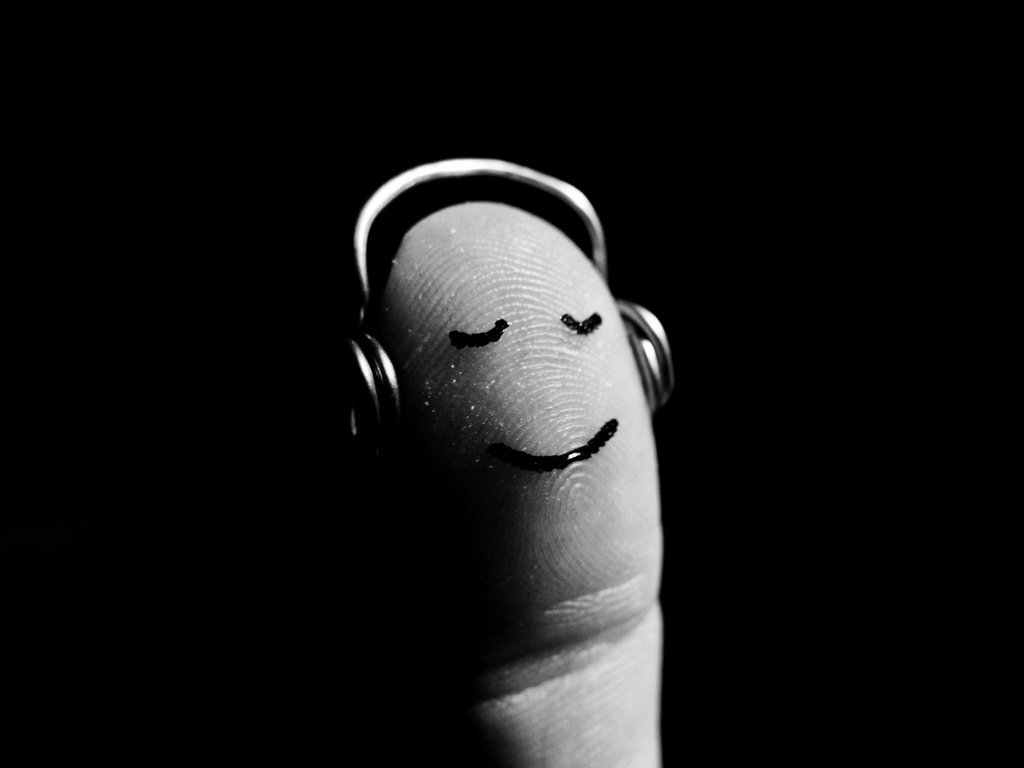
Photo by Thought Catalog on Unsplash - Image by Val Marion
In this strange hierarchy known as music criticism, everyone seems to believe they are entitled to judge a voice the moment it deviates by a millimetre from expectations. As if singing were nothing more than an extension of the person who owns it. The moment a singer steps outside the norm, people talk about flaws, not artistic choices.
- The voice is not a genetic code -
Many people imagine that singing is just a matter of opening your mouth, that everything depends on innate talent. From this belief come two persistent myths :
These ideas erase the notion of work, as if vocal technique didn’t exist. Yet the voice is trained exactly like any other instrument. Anyone can reach their own level of excellence through practice.
- When the instrument is the body -
We rarely criticize a bassist by telling them they should stop playing. We talk about their playing, not their identity.
For a singer, it’s different : the instrument is the person. That’s why singers become easy targets. Judging a voice is almost like judging a face.
A pianist missing two notes doesn’t spark an uproar. A singer slipping at the end of a phrase does. The voice is front and centre, loaded with expectations. The slightest imperfection turns into « drama. » The pressure is immense, sometimes wildly disproportionate.
- The good taste police -
There is a category of people convinced they are the guardians of « true » singing. They want everyone to sound the same : angelic voices, high notes pushed to excess, sanitized performances.
They often say « you were a bit out of tune », thinking they are being helpful, when in reality they are mostly projecting their frustrations. This attitude, inherited from ‘talent’ shows, reinforces the idea that a singer is unaware of their own mistakes and needs to be « brought back to reality ».
In the end, they discourage more than they advise. This culture has caused real damage, turning people who have never sung, composed, or written into so-called « music experts ».
- Cultural legacy -
A wrong instrumental note? We move on.
A vocal slip? Time for a compilation of vocal disasters.
This imbalance pushes some singers to offer only formatted, calibrated performances, designed to avoid mockery at all costs. Under the guise of kindness, vocations are crushed. Singing is simple and intimidating at the same time. Many are dreaming of it. Few truly dare.
When someone does dare, others sometimes react with jealousy or fear of being outshined. The internet amplifies this reflex, where anonymous comments are often cruel, gratuitous, and dehumanizing.
- The musical paradox -
Even within the music world itself, singers face a rather bitter contradiction : they are criticized as if they were not musicians.
Yet where an instrumentalist reads their part :
A singer must read :
The vocal score is one of the most demanding, both for the singer and for the main accompanying instrument. And yet some still claim that « singing is not an instrument » and that « a singer is not a musician ».
- The temptation of the shortcut -
The arrival of AI in music has sparked as much hope as fear. Some see a technical revolution, others a cultural threat. As often, the truth lies somewhere in between.
Used properly, these tools can become allies : vocal editing, cleanup, pitch correction, mixing, mastering, acoustic simulators, intelligent microphones. This is no longer science fiction.
Misunderstood, they create the illusion that years of technique can be replaced by a few plugins. Those who confuse singing with sonic appearance risk becoming dependent on artificial results and incapable of delivering live. An audience will forgive a poorly placed breath, but not a singer who cannot actually sing.
Another danger is the dilution of musical information quality, a less visible but very real consequence. More and more educational content (blogs, videos, articles, newsletters) is already written by AI, sometimes without serious human review. The result is a flood of generic, imprecise, sometimes incorrect advice, wrapped in polished presentation. For beginners, distinguishing real knowledge from empty jargon becomes increasingly difficult.
The paradoxical outcome is the more artificial performances multiply, the more truly trained voices become precious. A real voice, expressive and mastered, will never become obsolete. It remains a unique signature, if properly protected, and stands out even more in a uniform landscape. AI cannot prevent the existence of real singers.
Conclusions
Being a singer means accepting to lend one’s very being to the judgment of the world. Not because singers are less skilled, but because their instrument is intimate and vulnerable. The voice awakens in others a mix of fantasies, illusions, fears, and jealousy.
Technology will evolve. Production habits will change as well. But what makes a singer — presence, breath, tension, humanity — remains irreplaceable. AI can imitate a breath, but it cannot give it a heart.
The voice can be learned, trained, shaped. Those who claim otherwise mostly reveal their ignorance.
What do you think?
